

Despite the difficulties and challenges we have faced globally this year, Uruguay has found a way to grow, attract new investors and strengthen its role in the region and around the world.
What are the new measures taken by the government to attract foreign investment for construction? Also, did you know that the Uruguayan company República AFAP was recognized as a “Company with an Excellent Track Record”? And finally, what is it like to start a business in Uruguay?
The new government measure to promote construction
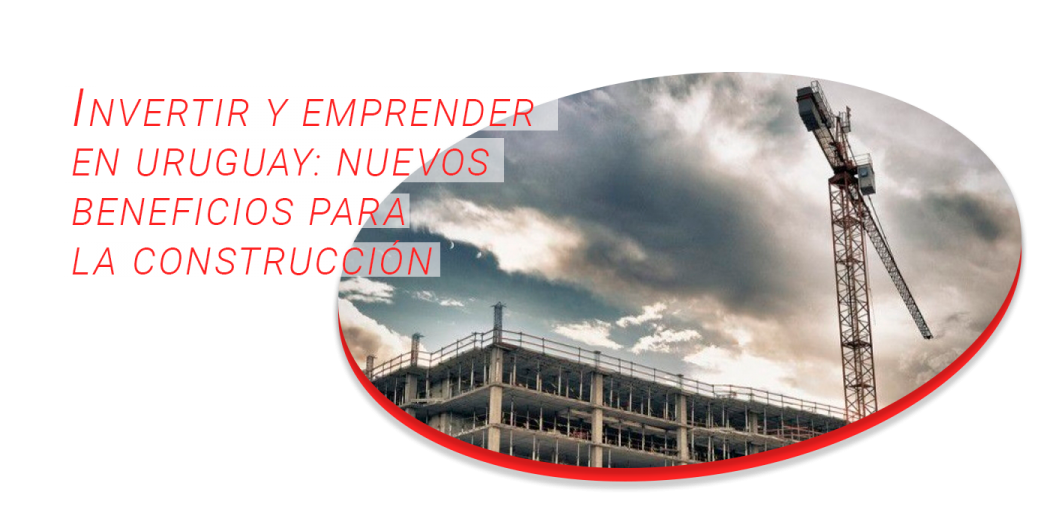
President Luis Lacalle Pou announced a new measure to attract foreign investment, lowering the investment threshold and expressing new tax benefits for building properties in the country.
Following a decree published on November 24, those who invest approximately US$2,25 million can access: an exemption from the Tax on Income from Economic Activities equivalent to a percentage of the investment they make; an exemption from taxes on the importation of equipment, machinery and materials; a credit for the VAT included in these acquisitions; and an exemption from the Property Tax on real estate for eight years if the project is located in Montevideo and for 10 years if it is located in the interior of the country.
Fabián Birnbaum, founding partner of FBM Advisory, explained to the Argentine media La Nación that “what happened is that an investment of US$14 million went to US$7 million and now to US$2 million. The threshold was lowered, but beyond the numerical reduction, with this measure more projects will be covered. It is another reduction, but it is relevant because it helps more construction and more jobs to be generated.”
The Uruguayan company that put Uruguay on the podium
República AFAP was recognized as a “Company with an Excellent Track Record” for having received the Ibero-American Award for Excellence in Management for the third time. It is the only company in the financial sector in Ibero-America to receive this distinction.
The general manager of República AFAP, Carlos Matyszczyk, says that this award places the company on a global level and positions the country and the region as an attractive area for investment. “It helps us position Latin America as a region where there are well-managed companies, where it is easy to do business, enter into agreements and commercial alliances, as an attractive region for investment,” explained Matyszczyk.
What is it like to start a business in Uruguay?
Since 2006, Uruguay has been part of the Global Entrepreneurship Monitor, which allows us to analyze the development of entrepreneurial activity in the country, measure its evolution and consider its challenges.
To analyze this activity in the country, we can see that in 2018 the rate of entrepreneurial activity was 15,7%, which means that 16 out of every 100 Uruguayans choose to start a business. This jump can be due to two factors: one is the increase in opportunity entrepreneurs, that is, those who do it because they found a promising idea, product or service. And on the other hand, entrepreneurship out of necessity, those who choose this activity because they have no other livelihood options.
What incentives exist from public policies?
There are two types of policies: social and development. The former seek to support groups within society that face problems finding employment. Development policies, on the other hand, target dynamic ventures that have the potential to move the numbers of an economy.
Leonardo Veiga, head of GEM Uruguay and professor at IEEM, explains that Uruguay faces the need for a third type of policy: social consolidation. “In a society in which many of the activities that were previously carried out by the middle class will be automated, entrepreneurship is safe. In an economy in which new technologies will allow the implementation of solutions through the market, where previously only business solutions were possible, many people will be needed who are capable of actively and creatively participating in these markets.”
Sources: La Nación , El País , El Observador.
