

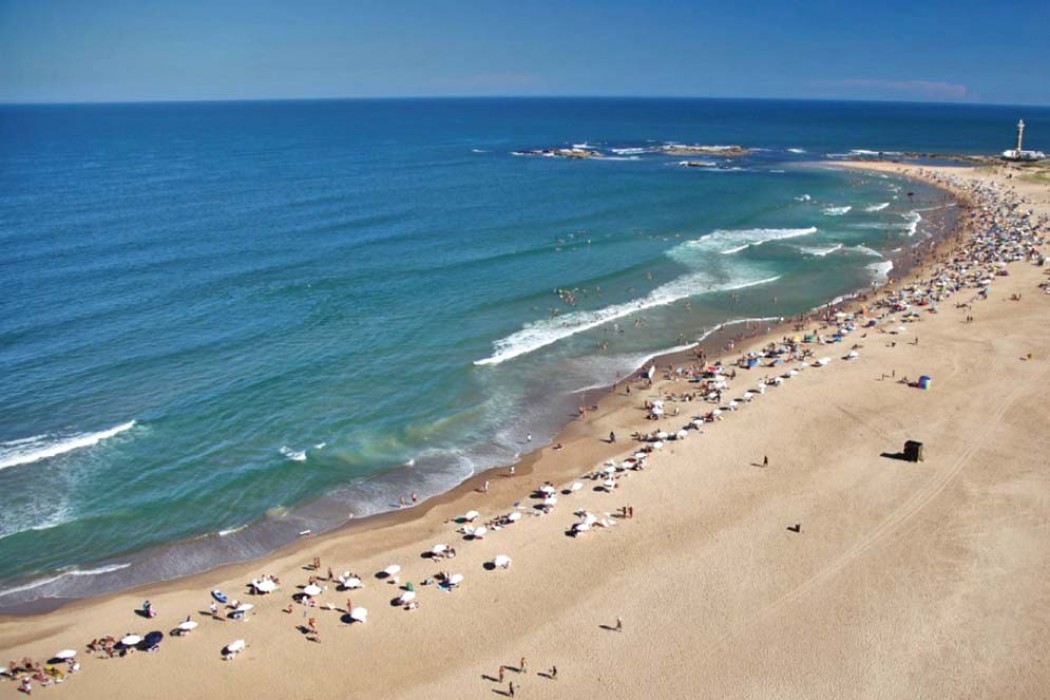
This is a more accessible alternative in the exclusive area of José Ignacio; its landscapes and gastronomy stand out.
They say it is the neighborhood of the future and its exponential growth in recent seasons is in line with that forecast. With its 150 hectares of pine trees and paradisiacal beaches, calm sea, La Juanita, the enclave of forest and beach at the entrance to cosmopolitan José Ignacio, is experiencing an unprecedented boom. Driven by Argentines with average pockets and by a high-quality gastronomic scene - similar to the one that in 2000 finished positioning José Ignacio on the international map - the new neighborhood now shines with its own light: it secured its good star with the arrival of Bahía Vik, an international hotel, designed by the Norwegian Alexander Vik as a refuge for Europeans, who pay up to US$ 4000 a night to enjoy that exclusivity facing the sea.
La Juanita, however, doesn't aspire to the cosmopolitanism of its "older brother," José Ignacio. Relaxed, with a bohemian and at times hippie-chic atmosphere, it's a truly heterogeneous mix of people, places, and social classes, which has made it not only the counterpart of a former fishing village, but also a desirable location for middle-class Argentines, who are now choosing to build their homes there at much more affordable prices.
La Juanita, a new paradise in José Ignacio
La Juanita, a new paradise in José Ignacio. Photo: LA NACION / Santiago Hafford / Special correspondent
However you look at the phenomenon, the equation is more economic: the price of land per m2 (from US$100 in the countryside to US$350 for lots facing the sea) costs almost 10% of what it costs per m2 in the centre of José Ignacio. The international positioning of José Ignacio as an elite place - today converted into a chic bastion of Europeans, North Americans and Argentines with very good fortune - has only driven out many of its former residents who are now considering changing their neighbourhood to La Juanita, just minutes away. In this exchange, there is also a big difference, explains Ignacio Ruibal, a pioneer in building his house there, and one of the promoters of the neighbourhood.
Martín Pittaluga, owner of La Huella, puts it this way: “It's a captivating place because it's relaxed, very democratic, there's a wide range of lots available, and you don't need to spend a lot to settle there. In José Ignacio, on the other hand, prices have become prohibitive for the middle class.”
With seven restaurants run mostly by their owners, three inns, 250 permanent residents and more lax regulations for listening to live music, which is not allowed in José Ignacio, the neighborhood has already launched its first real estate development to pay from scratch.
Aimed at a young audience, Casa Grande, the name of the two- and three-room apartment complex on Route 10, promises to finish shaping La Juanita as a possible paradise, this time within reach of middle-class tourists.
Source: lanacion.com.ar
